Table of Contents
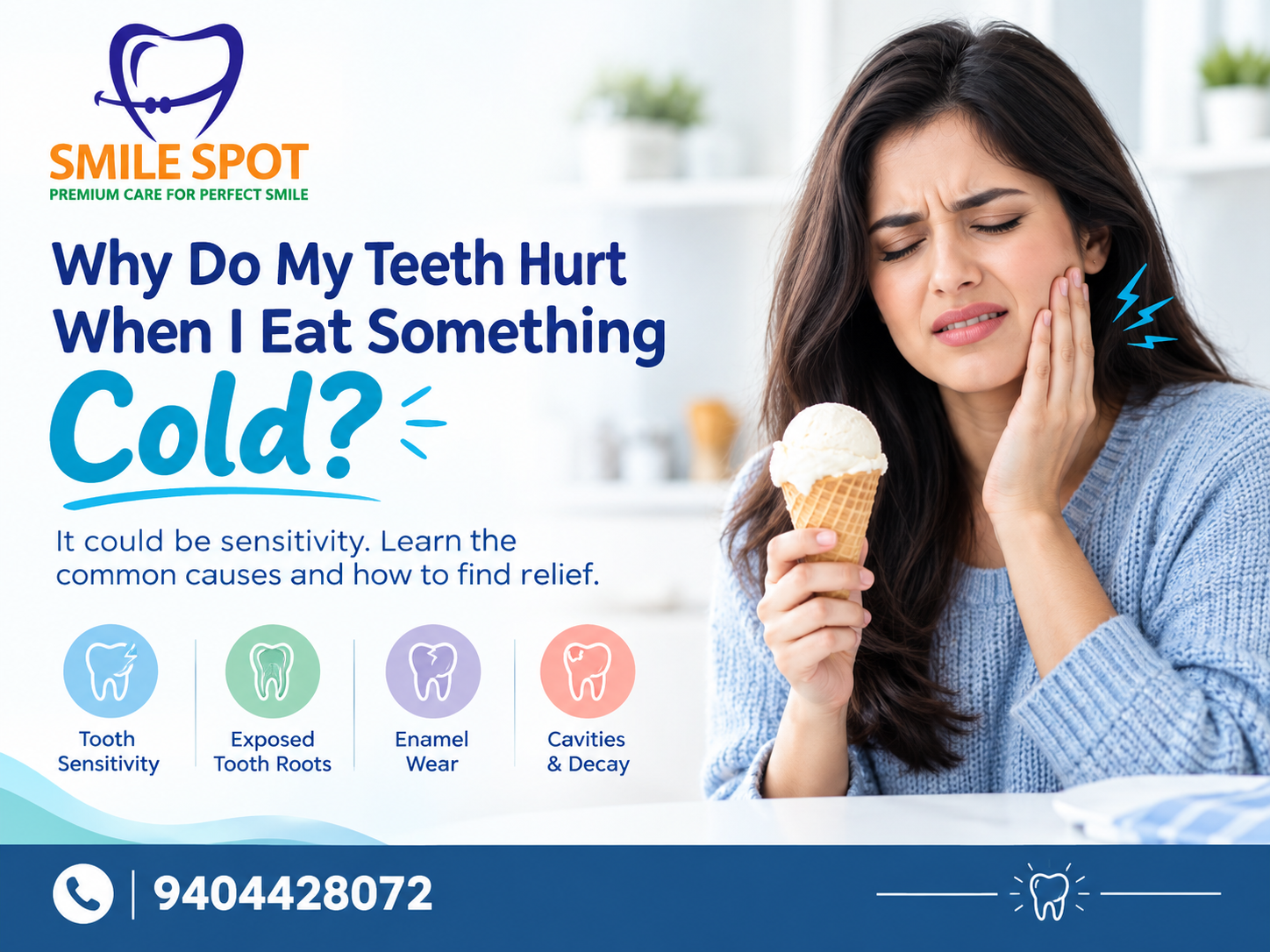
Teeth Hurt When I Eat Something Cold because the inner part of the tooth may become more sensitive when the protective enamel or gum tissue is reduced. This is commonly called tooth sensitivity. In some cases, sensitivity is temporary and mild, but sudden or persistent pain can also be a sign of a dental problem that needs attention.
If ice cream, cold water or chilled drinks make your teeth hurt, understanding the possible cause can help you decide what to do next.
Why Do Teeth Hurt With Cold Foods?
Cold foods can trigger pain when the nerves inside or beneath the tooth become exposed or more sensitive. Normally, enamel and other tooth structures protect the inner tissues from temperature changes.
Sensitivity may occur when:
- Tooth enamel becomes worn down
- Gums recede and expose the tooth root
- A cavity develops
- A tooth is cracked or damaged
- A filling becomes worn or loose
- Teeth are affected by gum disease
- Whitening products cause temporary sensitivity
The cause is not always the same for everyone, so recurring pain should not simply be ignored.
Is It Normal for Teeth to Hurt When Drinking Cold Water?
Occasional, brief sensitivity to cold can happen, but repeated or intense pain is not something you should consider normal.
If the discomfort lasts only a few seconds and goes away quickly, it may be related to general tooth sensitivity. However, pain that is severe, continues after the cold is removed, or affects one particular tooth may need a dental examination.
Understanding our experience in personalised dental care can also help you feel more confident about seeking the right advice for your symptoms.
What Causes Sudden Tooth Sensitivity?
Several common dental problems can make teeth suddenly sensitive.
1. Worn Tooth Enamel
Enamel protects the sensitive inner layers of your teeth. Brushing too aggressively, using highly abrasive products or consuming acidic foods and drinks frequently can contribute to enamel wear.
Once the protective layer becomes thinner, temperature changes may cause discomfort.
2. Gum Recession
Receding gums can expose the roots of the teeth, making them more sensitive to cold. Unlike the crown of the tooth, the exposed root does not have the same enamel protection.
Gum recession may be associated with gum disease, aggressive brushing or other factors.
3. Tooth Decay
A cavity can cause sensitivity when it reaches deeper layers of the tooth. You may notice pain when eating cold, hot or sweet foods.
A cavity does not always cause severe pain in the beginning, which is why regular dental checkups are important.
4. Cracked or Damaged Tooth
A cracked tooth can sometimes cause sharp pain when exposed to cold foods or drinks. The discomfort may come and go, making it easy to overlook.
If sensitivity suddenly develops in one tooth, particularly after biting something hard, it is worth getting the tooth checked.
5. Recent Dental Treatment
Temporary sensitivity can occur after some dental procedures, including teeth whitening or certain restorative treatments. This often improves with time, but persistent or worsening pain should be discussed with your dentist.
Why Does Only One Tooth Hurt With Cold?
If cold consistently causes pain in only one tooth, there may be a specific problem affecting that tooth. Possible causes include decay, a crack, a damaged filling or irritation of the tooth’s inner tissues.
This type of sensitivity is different from general sensitivity affecting several teeth and should be evaluated if it continues.
How Long Should Cold Tooth Sensitivity Last?
Mild sensitivity caused by cold usually stops shortly after the cold stimulus is removed. Pain that continues for a prolonged period, becomes stronger or occurs without an obvious trigger may indicate a deeper dental issue.
The exact cause cannot be determined from sensitivity alone. A dentist may need to examine the tooth and, when necessary, take dental X-rays.
What Can You Do for Sensitive Teeth at Home?
You can reduce mild tooth sensitivity by using a toothpaste made for sensitive teeth, brushing gently and avoiding very acidic foods and drinks.
Helpful habits include:
- Use a soft-bristled toothbrush.
- Avoid brushing too hard.
- Use fluoride toothpaste.
- Clean between your teeth regularly.
- Reduce frequent acidic drinks.
- Avoid extremely hot or cold foods if they trigger pain.
- Do not use unverified home remedies on sensitive teeth.
These steps may help manage sensitivity, but they do not treat problems such as cavities, cracks or gum disease.
Should You Stop Eating Cold Foods?
You do not necessarily need to stop eating cold foods permanently, but it is sensible to avoid foods that repeatedly trigger pain until the cause is understood.
If sensitivity keeps returning, changing your diet alone may only hide the symptom rather than address the underlying problem.
When Should You See a Dentist?
You should consider seeing a dentist if cold sensitivity is persistent, severe, getting worse or limited to one tooth.
You should also seek dental advice if you notice:
- Toothache without cold exposure
- Swollen or bleeding gums
- A visible cavity
- A chipped or cracked tooth
- Pain when biting
- Sensitivity to both hot and cold
- Pain that continues after the cold is removed
- Facial or gum swelling
Early assessment can help identify the cause before the problem becomes more complicated.
Can Sensitive Teeth Be Treated?
Yes, treatment depends on what is causing the sensitivity. Mild sensitivity may improve with desensitising toothpaste and better brushing habits, while problems such as cavities, gum disease, damaged fillings or cracked teeth may require dental treatment.
Your dentist can recommend the appropriate option after examining your teeth.
For more information about maintaining healthy teeth and gums, our approach to complete dental care focuses on prevention as well as timely treatment.
Frequently Asked Questions
Why do my teeth hurt when I eat ice cream?
Cold temperatures can trigger sensitive nerves when enamel is worn, gums have receded or another dental problem is present.
Why does cold water make my teeth hurt?
Cold water can stimulate exposed or sensitive areas of a tooth. If the pain happens regularly, a dental examination can help identify the cause.
Can tooth sensitivity go away on its own?
Mild temporary sensitivity may improve, but persistent sensitivity should not be ignored because it can sometimes be linked to decay, gum recession, cracks or other dental problems.
Are sensitive teeth a sign of a cavity?
They can be. Cavities are one possible cause of sensitivity, but enamel wear, gum recession and other conditions can also cause it.
Is tooth sensitivity serious?
Not always. However, severe, persistent or worsening sensitivity deserves professional evaluation to rule out an underlying dental problem.
Can brushing too hard cause sensitive teeth?
Yes. Aggressive brushing can contribute to enamel wear or gum recession, which may expose more sensitive areas of the tooth.
Don’t Ignore Repeated Cold Sensitivity
A quick sharp pain from ice cream or cold water may seem minor, but repeated sensitivity can have several causes. The best way to manage persistent cold sensitivity is to find out what is causing it rather than simply avoiding cold foods.
With the right dental assessment and treatment, many causes of tooth sensitivity can be managed effectively. If cold foods or drinks are regularly causing discomfort, speaking with our dental team about your symptoms can help you understand what may be behind the sensitivity.
Leave a Reply