Table of Contents
Key Takeaways of Why Do Teeth Gaps Increase With Age?
- Teeth can gradually move throughout adult life, so spacing may change with age.
- Gum disease can affect the tissues and bone supporting the teeth and may contribute to changes in tooth position.
- Missing teeth can allow neighbouring teeth to move into the empty space.
- A new or increasing gap should not automatically be considered a normal part of ageing.
- Bleeding gums, gum recession, loose teeth or persistent bad breath alongside new gaps need dental attention.
- Treatment depends on the reason for the spacing and may include gum treatment, orthodontics, bonding or replacement of missing teeth.
- Early assessment can help identify whether the gap is mainly a cosmetic concern or a sign of an underlying dental problem.
Introduction
Have you noticed a small space appearing between your teeth that was not there a few years ago?
Many people assume that changes in tooth spacing are simply part of getting older. While teeth can naturally move over time, a newly developing or widening gap can sometimes be linked to changes in the gums, supporting bone, bite or the position of neighbouring teeth.
The front teeth are often where people notice these changes first. A gap may begin as a very small space and gradually become more visible. In some cases, there may be no pain at all, which can make it easy to overlook.
Understanding why do teeth gaps increase with age can help you recognise when the change is harmless and when it deserves a dental examination.
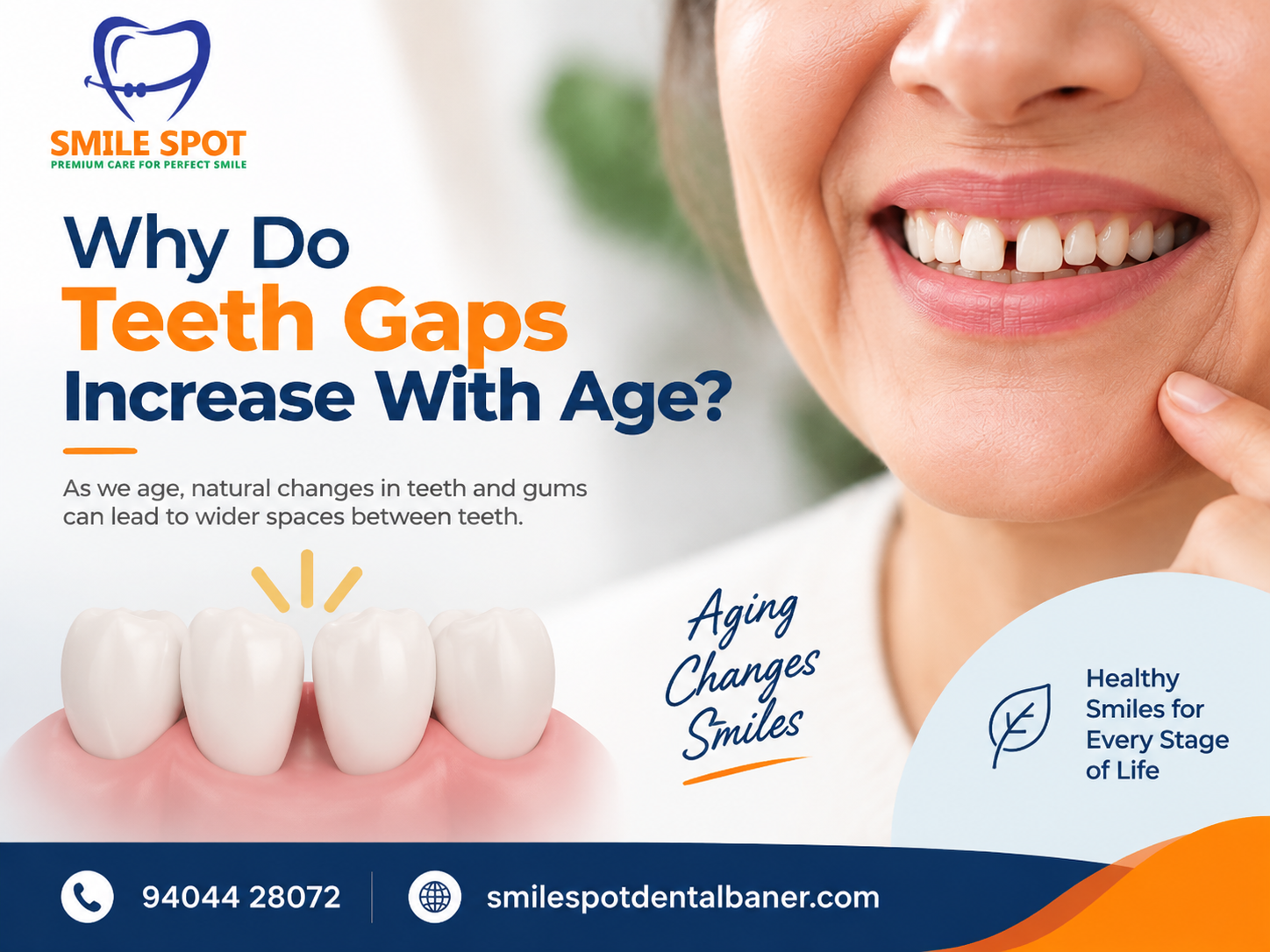
Why Do Teeth Gaps Increase With Age?
Teeth are not permanently fixed in one position. They are held in the jaw by supporting tissues, including the gums, periodontal ligament and surrounding bone. Changes in these supporting structures can affect tooth position over time. At Smile Spot, our approach to personalised dental care considers the health of these supporting structures when assessing changes in tooth spacing.
Some common reasons include:
1. Natural Tooth Movement
Teeth can move gradually throughout adulthood. Changes in bite forces, pressure from neighbouring teeth and normal changes in the supporting tissues may alter their position.
This movement can sometimes make existing spaces more noticeable.
2. Changes in the Gums
Healthy gums provide important support around the teeth. With age, some people develop gum recession or other changes in the gum tissues.
When the gumline changes, the spaces around teeth can appear larger even if the actual movement of the teeth is relatively small.
3. Gum Disease
Gum disease is an important cause to consider when new tooth spacing develops.
Early gum disease can cause redness, swelling and bleeding. If gum disease progresses, it can affect the tissues and bone that support the teeth. In advanced cases, teeth can become loose or change position.
This means a new gap should not be ignored when it occurs together with bleeding gums, gum recession or loose teeth.
4. Missing Teeth
When a tooth is lost, the surrounding teeth may gradually move towards the empty space.
This can change the alignment of neighbouring teeth and create new spaces elsewhere in the mouth. A missing tooth can therefore affect more than just the area where the tooth was originally located.
5. Changes in the Bite
The way your upper and lower teeth come together can change over time.
A change in bite may place different amounts of pressure on certain teeth. This can contribute to changes in tooth position and spacing.
6. Previous Dental or Orthodontic Treatment
People who had braces or other orthodontic treatment earlier in life may notice changes in tooth position later if they do not continue with the recommended retention plan.
Teeth can shift after orthodontic treatment, which is why retainers may be recommended for maintaining the corrected position.
Is It Normal to Develop Gaps Between Teeth With Age?
A change in tooth spacing can happen as people get older, but it should not automatically be considered normal ageing.
A small, stable gap that has been present for many years may simply be part of your natural tooth arrangement. However, a gap that is new, widening or accompanied by other symptoms deserves closer attention.
Pay particular attention if you notice:
- Bleeding when brushing or flossing
- Red or swollen gums
- Gum recession
- Persistent bad breath
- Teeth feeling loose
- Changes in your bite
- Food getting trapped between teeth
- Increasing spaces between several teeth
These signs can point towards an underlying gum or dental problem rather than a purely cosmetic change.
Can Gum Disease Cause Gaps Between Teeth?
Yes. Advanced gum disease can affect the tissues and bone that support the teeth.
When the supporting structures around a tooth become damaged, the tooth may become less stable. Changes in tooth position can then occur, sometimes resulting in spaces between teeth.
This is one reason why new gaps between teeth and gum symptoms should be evaluated together.
If your gums bleed regularly, do not wait until a gap becomes large before seeking advice. Treating gum problems early may help protect the supporting structures around your teeth.
Why Do Front Teeth Sometimes Develop Gaps?
The front teeth are highly visible, so even a small change in spacing can be easy to notice.
A gap between the two upper front teeth is commonly called a diastema. Some people naturally have a diastema from childhood. In others, spacing may become more noticeable later.
Possible contributing factors include:
- Changes in gum support
- Tooth movement
- A missing neighbouring tooth
- Changes in bite
- Previous orthodontic treatment
- Differences in tooth size or shape
- The position of the tissue connecting the upper lip and gums
A dentist can examine the teeth and surrounding tissues to determine why the gap has developed.
When Should You See a Dentist About a New Tooth Gap?
You should consider a dental examination if a gap is new, becoming wider or appearing along with other oral health changes.
It is particularly important to seek an assessment if you have:
| Symptom | Why It Matters |
|---|---|
| Bleeding gums | May indicate gum inflammation or disease |
| Gum recession | Can expose more of the tooth and change its appearance |
| Loose teeth | May indicate reduced supporting structures |
| Persistent bad breath | Can occur with gum disease or poor plaque control |
| Increasing gaps | May indicate tooth movement or loss of support |
| Pain or swelling | May indicate infection or another dental problem |
| Change in bite | May suggest movement of one or more teeth |
A dental examination can help determine whether the gap is mainly a cosmetic concern or whether an underlying condition needs attention.
How Does a Dentist Check the Cause of a Tooth Gap
The first step is usually a detailed examination of the teeth and gums.
Your dentist may assess:
- The size and location of the gap
- Gum health around the affected teeth
- Signs of gum recession
- Tooth mobility
- Your bite and tooth alignment
- Existing fillings, crowns or other dental work
- Missing or damaged teeth
- Your previous orthodontic history
Depending on what is found, dental X-rays may also be recommended to assess the supporting bone and roots.
The treatment should be based on the reason the gap developed, rather than simply closing the space without addressing its cause.
Can Gaps Between Teeth Be Treated?
Yes, many types of tooth spacing can be treated. However, there is no single treatment that works for every patient.
The appropriate option depends on the size and location of the gap, the health of the gums and teeth and the reason the spacing developed.
Orthodontic Treatment
Braces or clear aligners can gradually move teeth into a more suitable position.
This may be considered when tooth movement or alignment is responsible for the spacing.
Dental Bonding
For selected small gaps, tooth-coloured composite material can sometimes be used to change the shape of teeth and reduce the visible space.
This is generally more suitable when the teeth and gums are healthy.
Treatment for Gum Disease
If gum disease is contributing to tooth movement, the gum condition needs to be addressed first.
Improving gum health and controlling inflammation can help protect the supporting structures around the teeth.
Replacement of Missing Teeth
If spacing has developed because a tooth is missing, treatment may involve replacing the missing tooth. Depending on the individual case, options may include a dental implant, bridge or removable dental prosthesis.
Can You Prevent Gaps From Developing as You Age?
You cannot prevent every change in tooth position, but maintaining good oral health can help protect your teeth and their supporting tissues.
Maintain Good Oral Hygiene
Brush twice a day with fluoride toothpaste and clean between your teeth regularly. Interdental cleaning helps remove plaque from areas a toothbrush cannot reach effectively.
Pay Attention to Bleeding Gums
Bleeding gums should not simply be accepted as a normal part of ageing. If bleeding continues, arrange a dental examination.
Attend Regular Dental Check-ups
Routine examinations allow your dentist to identify changes in tooth position, gum health and other oral conditions before they become more advanced.
Replace Missing Teeth When Appropriate
Leaving a missing tooth untreated can allow surrounding teeth to shift. Your dentist can explain whether replacement is recommended in your case.
Wear Retainers as Advised
If you have previously undergone orthodontic treatment, following your retainer plan can help maintain the corrected tooth position.
Does Every Tooth Gap Need Treatment?
Not every gap needs to be closed.
Some people naturally have spaces between their teeth that are healthy, stable and do not affect function. Treatment may not be necessary if the teeth and gums are healthy and the spacing is not causing any concerns.
However, a new or widening gap is different.
If the spacing has appeared recently, a dentist should determine why it is happening before deciding whether treatment is needed.
The goal is not always to make every tooth touch. The priority is to maintain healthy gums, stable teeth and a comfortable bite.
Frequently Asked Questions
Q: Why do teeth gaps increase with age?
Teeth can gradually shift throughout adulthood, while changes in the gums, supporting bone, bite and neighbouring teeth can also affect spacing. Gum disease and missing teeth are important causes to rule out when a new gap develops.
Q: Can gum disease make gaps between teeth bigger?
Yes. Advanced gum disease can damage the tissues and bone supporting the teeth. This can reduce tooth stability and contribute to changes in tooth position, including increasing spaces.
Q: Is a new gap between my front teeth a concern?
A new or widening gap should be examined, particularly if you also have bleeding gums, gum recession, loose teeth, swelling or bad breath. The gap itself may not be harmful, but the underlying cause may require treatment.
Q: Can teeth move even after braces?
Yes. Teeth can shift after orthodontic treatment. This is why retainers are commonly recommended to help maintain the position achieved during treatment.
Q: Can a dentist close a gap between teeth?
Yes. Depending on the cause and size of the gap, treatment may include orthodontics, clear aligners, dental bonding or other restorative options. If gum disease is present, it should be addressed as part of the treatment plan.
Q: Can missing teeth cause gaps elsewhere?
Yes. When a tooth is missing, nearby teeth can gradually move towards the empty space. This can alter the alignment and spacing of other teeth.
Q: Should I worry if my gap is getting bigger but there is no pain?
You should still consider a dental examination. Gum disease and other causes of tooth movement may not cause significant pain in the early stages. A dentist can check the gums, teeth and supporting structures to identify the reason for the change.
Conclusion
Gaps between teeth can become more noticeable with age for several reasons, including gradual tooth movement, gum changes, gum disease, missing teeth and changes in the bite.
A stable gap that has always been present may not require treatment. However, if you notice a new or widening gap, particularly with bleeding gums, gum recession, loose teeth or changes in your bite, it is worth contacting our dental team for an examination.
Leave a Reply