Table of Contents
Key Takeaways of foods to avoid after dental implant
- For the first 24 to 48 hours after dental implant surgery, only cold or room-temperature liquids should be consumed; no hot foods or drinks
- Hard, crunchy, sticky and acidic foods must be avoided for the first 2 to 4 weeks after implant placement to protect the healing bone-implant interface
- Osseointegration (bone fusion with the implant) takes 3 to 6 months; during this period, the implant site should not bear heavy biting load
- Smoking after dental implant surgery is the single greatest risk factor for implant failure; it significantly impairs blood flow to the healing bone
- Good nutrition during recovery is as important as food avoidance; protein-rich soft foods support bone and soft tissue healing
- Most patients in Baner return to normal daily activities including work within 1 to 3 days of implant surgery
- Implant success rates of 95 to 98% at 10 years are achievable with correct aftercare including dietary compliance and oral hygiene
Introduction
You have had your dental implant placed. The titanium post is in the jawbone, the sutures are in place and you are heading home with aftercare instructions. The next question most patients ask is: what can I actually eat?
Foods to avoid after dental implant Baner patients receive clear guidance on at Smile Spot because diet in the post-operative period is one of the most significant factors in whether osseointegration succeeds. The right food choices protect the healing site; the wrong ones can displace a healing implant, introduce bacteria or impair bone remodelling. This guide walks you through exactly what to eat and what to avoid at every stage of recovery, with Indian dietary context specific to Pune.
Quick Facts: Dental Implant Recovery in Baner, Pune
| Label | Fact |
| Day 1 to 3 diet: liquids only | Cold or room-temperature; no hot liquids |
| Day 4 to 7: soft foods | Curd, banana, khichdi, mashed potato, soft idli |
| Week 2: soft normal foods | Soft rice, cooked dal, paneer, soft fish |
| Duration before implant crown can bear full load | 3 to 6 months (after osseointegration confirmed) |
| Foods to avoid throughout recovery | Hard, crunchy, sticky, very hot, highly acidic |
| Alcohol restriction | Minimum 72 hours; ideally 2 weeks |
| Smoking restriction | Strongly advised to stop; smoking raises implant failure risk |
Why Does Diet Matter After Dental Implant Surgery?
Dental implant surgery is a minor surgical procedure. A titanium post is surgically placed into the jawbone. Over the following 3 to 6 months, the bone cells grow into and around the microscopic surface texture of the titanium in a process called osseointegration, the fusion of bone to the implant surface. During this period, the implant has no crown and no functional bite load, but it is vulnerable to mechanical disruption and infection.
Hard or crunchy food puts physical pressure on the healing bone around the implant before osseointegration is complete. This disrupts the bone-implant contact that is developing. Sticky food can pull on sutures or dislodge a healing blood clot. Very hot food impairs healing by dilating blood vessels and increasing bleeding risk. Acidic food irritates the soft tissue around the implant site.
Getting the diet right in the first 4 weeks costs you nothing except a little planning. Getting it wrong can cost you the implant itself. Consult our dental clinic in baner for professional implant care and complete oral health solutions.
Week-by-Week Diet Guide After Dental Implant Surgery
| Timeline | Recommended Foods | Foods to Avoid | Reason |
| Day 1-3 | Cold coconut water, thin dal water, cold lassi, sugar-free ice cream, cold smoothie without seeds | Hot tea, coffee, hot soup, hot rice, spicy food, alcohol | Heat increases bleeding; clot must not be disturbed |
| Day 4-7 | Soft idli (no sambar), curd rice, mashed banana, soft moong dal khichdi, mashed potato without skin, soft poha | Crunchy or fried food, roti, raw vegetables, fruit with seeds | Implant site still healing; no biting pressure on the area |
| Week 2 | Soft rice, well-cooked soft dal, soft paneer, boiled egg, soft cooked fish, soft sabzi | Hard bread, nuts, raw salad, papad, hard biscuits, chikki | Bone healing continues; no hard bite load |
| Week 3-4 | Most regular foods cooked soft; avoid biting directly on implant side | Very hard or sticky foods, chewing gum, hard dry fruits on implant side | Osseointegration progressing; caution still needed |
| Month 2-6 | Return to normal diet gradually; confirm with dentist at review | Extremely hard foods directly on implant site until crown is placed | Implant healing; full load only after confirmed osseointegration |
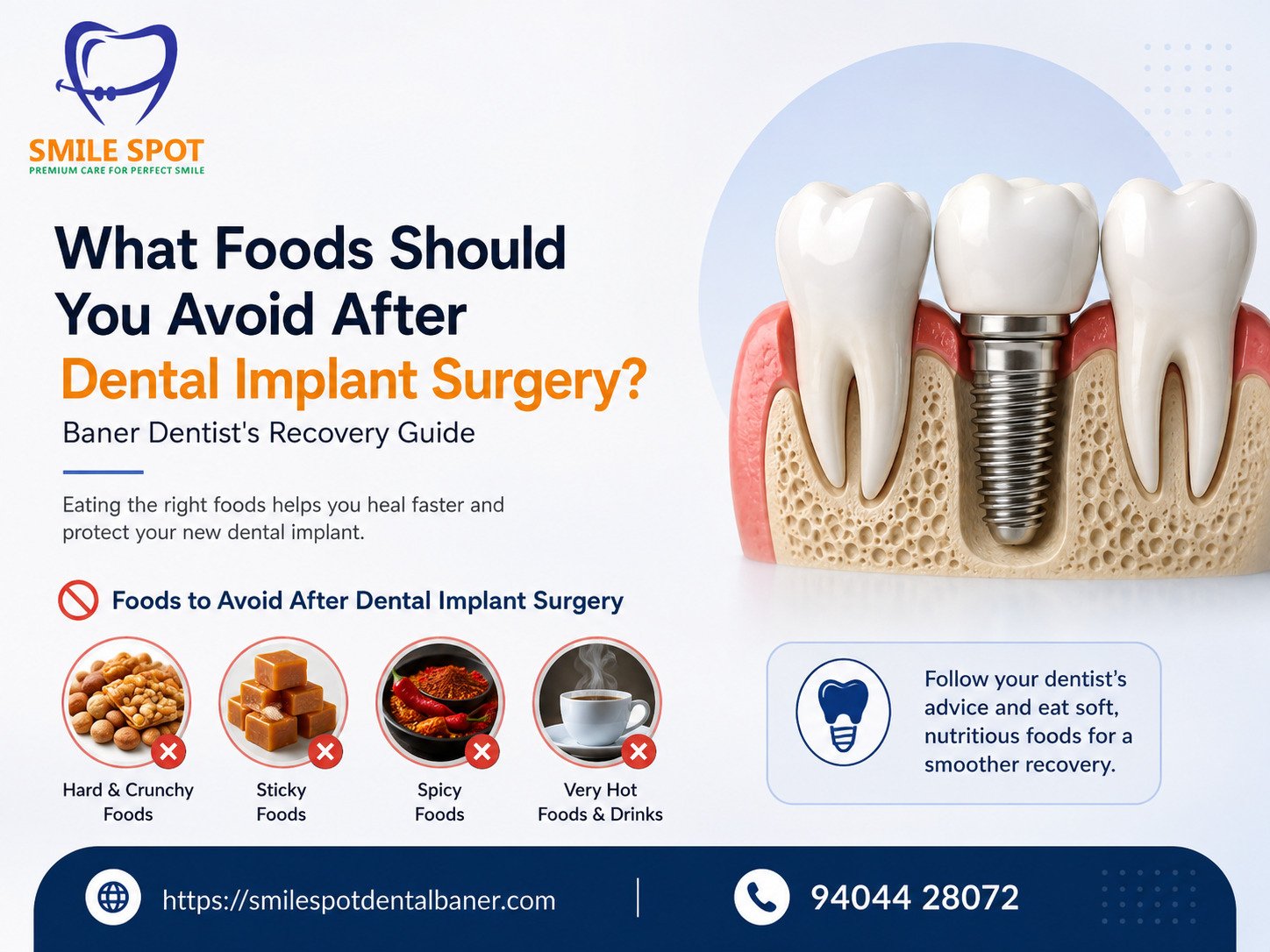
Foods to Avoid After Dental Implant Surgery: Complete List
Category 1: Hard and Crunchy Foods
These place direct mechanical pressure on the healing implant site. Even if the implant is not directly under the food being bitten, jaw movement transmits some force. Avoid throughout the first 4 weeks:
- Nuts and dry fruits (badam, cashew, kaju, peanuts)
- Hard biscuits, khakhra, papad, crackers
- Raw hard vegetables (raw carrot, raw beets, raw apple, corn on the cob)
- Chikki, hard candy, ice cubes
- Crusty bread, hard toast
Category 2: Sticky Foods
Sticky foods adhere to the implant site and can pull on sutures or disturb healing tissue:
- Chewing gum
- Sticky sweets like caramel or toffee
- Dry fruit such as dates and figs if very sticky
- Thick peanut butter in large quantities
Category 3: Very Hot Foods and Drinks
Heat increases blood flow to the healing area, raising the risk of bleeding and slowing clot formation:
- Hot chai or coffee: wait for it to cool to near room temperature
- Hot soup or hot dal in the first 48 hours
- Freshly made roti straight off the tawa in the first week
Category 4: Acidic and Spicy Foods
Acid and spice irritate the soft tissue wound around the implant site:
- Citrus juices (orange, lemon, sweet lime) in the first week
- Very spicy curries with chilli
- Tamarind-heavy dishes
- Pickles and achaar for the first 2 weeks
Category 5: Alcohol and Tobacco
- Alcohol interferes with the blood clotting process and impairs immune response. Avoid for at least 72 hours; ideally 2 weeks
- Smoking is the most significant risk factor for implant failure. Nicotine constricts blood vessels, reducing blood flow to the healing bone. Implant failure rates are 2 to 3 times higher in smokers than non-smokers
What to Eat After Dental Implant Surgery: Indian Diet Recommendations
A nutritious soft diet supports faster healing. Here are Indian food options that work well for Pune patients recovering from implant surgery:
| Food | Why It Helps | How to Prepare |
| Moong dal khichdi | High protein, soft texture, easily digestible | Cook until very soft; no whole spices; mild seasoning |
| Curd (dahi) | Probiotic, soft, cooling; offsets antibiotic effects | Plain or with soft banana; no seeds |
| Soft idli | Light, easy to chew, no seeds or hard pieces | Without sambar (acidic); mild chutney is fine |
| Mashed banana | Soft, calorie-dense, easy to eat | Mash fully; avoid adding nuts or seeds |
| Boiled egg (soft-boiled) | High-quality protein supports tissue healing | Soft-boiled; avoid fried preparation |
| Coconut water | Hydrating, naturally isotonic, cooling | Cold or room temperature; no added sugar |
| Soft paneer | Protein-rich, soft, no biting required | In soft gravy or mashed; no tandoor-hardened pieces |
| Mashed potato | Carbohydrate energy, very soft texture | No skin; mashed smooth with ghee or curd |
How to Care for Oral Hygiene After Dental Implant Surgery
Oral hygiene around the implant site requires modification during the healing period:
- Do not brush the implant surgical site for the first 24 to 48 hours. Gently rinse with warm salt water from day 2 onward
- After 48 hours, resume gentle tooth brushing around but not directly on the surgical site. Use a soft-bristle brush
- Use chlorhexidine mouthwash as prescribed by your dentist for the first 1 to 2 weeks to control bacterial infection risk at the implant site
- Do not use a water flosser or electric toothbrush at the implant site during the first 4 weeks
- Spit gently. Forceful spitting or rinsing in the first 24 hours can dislodge the healing blood clot
- Do not touch the surgical site with your tongue or fingers. Bacteria from the mouth and hands are a primary source of peri-implant infection
Red Flags: When to Contact Smile Spot Baner After Implant Surgery
Most post-implant discomfort is expected and resolves within 3 to 5 days. However, contact the clinic immediately if you experience:
- Heavy bleeding that does not slow with gentle pressure after 20 minutes
- Significant swelling that worsens after day 3 (some swelling peaking at day 2 to 3 is normal)
- Fever above 38 degrees Celsius, which may indicate infection
- The implant feels loose or has visibly shifted position
- Pus, unusual discharge or a persistent foul taste at the surgical site
- Severe pain that is not controlled by prescribed or over-the-counter pain relief
Dental Implant Aftercare in Baner: Serving Aundh, Wakad, Pashan and Hinjewadi
Smile Spot Orthodontics and Multispeciality Dental Clinic in Baner provides comprehensive post-implant aftercare including a 1-week review appointment, 1-month healing assessment and a 3 to 6 month osseointegration confirmation X-ray before the final implant crown is placed. Patients from Aundh, Wakad, Pashan and Hinjewadi have access to same-day emergency review appointments if post-operative concerns arise.
A 45-year-old accounts manager from Pashan who had her lower molar implant placed at Smile Spot in October followed the diet guide carefully for 4 weeks. Her 3-month review X-ray confirmed complete osseointegration with excellent bone-to-implant contact. She received her zirconia crown and has been eating normally on both sides since November. She told us the khichdi and curd diet was surprisingly manageable, and that her colleagues did not notice she had had surgery.
Frequently Asked Questions
Q: How long after dental implant surgery can I eat normally in Baner?
A: Most patients return to a near-normal soft diet by the end of week 2. Full return to all foods including hard and crunchy items is possible once the permanent crown is placed after osseointegration is confirmed at 3 to 6 months. During the healing period, the key is avoiding foods that place direct load on the implant site or irritate the soft tissue wound.
Q: Can I drink tea or coffee after dental implant surgery?
A: Yes, but only once it has cooled to room temperature. Very hot tea or coffee in the first 24 to 48 hours increases bleeding risk and impairs clot formation at the surgical site. After 48 hours, tea and coffee at normal drinking temperature are generally safe. Avoid very strong, acidic brews pressed against the implant side in the first week.
Q: What happens if I eat hard food after dental implant surgery?
A: Eating hard food too early after implant surgery risks mechanical disruption of osseointegration. The titanium post needs undisturbed contact with healing bone cells for fusion to occur. Hard biting forces on or near the implant site before osseointegration is established can cause the implant to fail to fuse with the bone, resulting in implant loss. This is why the dietary restrictions are not optional suggestions but clinically important instructions.
Q: Is smoking really that risky after dental implant surgery?
A: Yes, significantly. Nicotine causes vasoconstriction (narrowing of blood vessels) that reduces blood flow to the healing bone around the implant. Published research consistently shows implant failure rates 2 to 3 times higher in smokers than non-smokers. Smoking also increases the risk of peri-implantitis (infection around the implant) and delays soft tissue healing. If you cannot stop smoking permanently, stopping for at least 2 weeks before and 8 weeks after surgery significantly improves implant outcomes.
Q: Can I eat Indian food after dental implant surgery?
A: Yes, with modifications. Moong dal khichdi, curd, soft idli, mashed potato with ghee, soft paneer in mild gravy, boiled egg and banana are excellent post-implant foods that fit naturally into Indian dietary patterns. Avoid spicy curries, tamarind, raw vegetables, hard breads and pickles for the first 2 to 4 weeks. After week 4, most cooked Indian foods are suitable with the guidance to chew away from the implant site.
Q: When is my next appointment after dental implant placement at Smile Spot Baner?
A: A 1-week suture removal and healing check appointment is standard after implant placement at Smile Spot Baner. A 1-month soft tissue healing assessment follows. A 3 to 6 month X-ray confirms osseointegration before the implant crown is planned and placed. All follow-up appointments are included in your implant treatment plan and are essential for monitoring healing and confirming implant success.
Q: What is osseointegration and how long does it take?
A: Osseointegration is the process where bone cells grow into and fuse with the surface of the titanium implant post, anchoring it permanently in the jaw. It typically takes 3 to 6 months depending on bone quality and location, which is why the implant crown is not placed until this fusion is confirmed on X-ray.
Conclusion
What you eat in the weeks after dental implant surgery is a genuinely significant factor in whether your implant succeeds. Foods to avoid after dental implant surgery in Baner are those that mechanically disrupt healing bone, introduce bacteria or impair the blood flow that bone regeneration depends on. Following the week-by-week diet guide in this post protects your investment and maximises the probability of the 95 to 98% long-term implant success rate achievable with modern implants.
Dr. Akshay Bhole (BDS, MDS – Orthodontics and Invisalign Provider) and the team at Smile Spot Orthodontics and Multispeciality Dental Clinic in Baner provide personalised aftercare instructions at every implant appointment and are available for same-day queries or emergency reviews if needed.
For implant consultations or post-surgery follow-up, visit or contact our clinic.
Leave a Reply